
Inflation Peaked? What the Iran Peace Deal Means for Interest Rates & Your Credit Card Bills
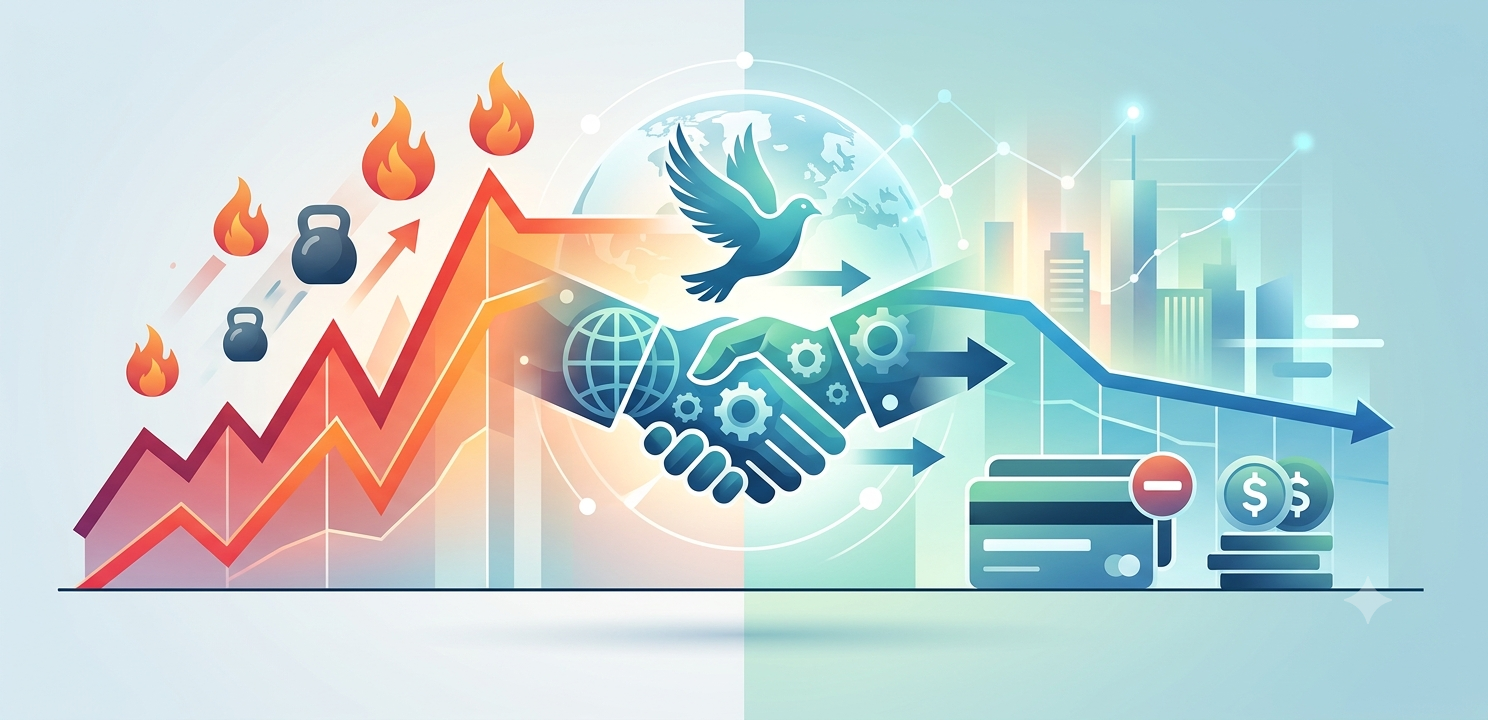
For the past several months, millions of households across the United States have been feeling an intense pinch at the checkout counter and on their monthly financial statements. Driven heavily by supply chain constraints and an energy shock triggered by intense Middle East tensions, inflation in 2026 has kept everyday living costs frustratingly high.
However, a major geopolitical breakthrough just rewrote the economic forecast. The signing of the Islamabad Memorandum—a historic memorandum of understanding between the United States and Iran aimed at ending the war and permanently reopening the crucial Strait of Hormuz—has sent immediate shockwaves through the global market.
As a consumer, you might wonder how a diplomatic breakthrough thousands of miles away impacts your wallet. The connection is direct. Here is exactly how the US-Iran peace deal is poised to alter global energy supply, shift central bank interest rate trajectories, and ultimately affect your credit card bills.
1. The Energy Pipeline: Why Peace Drops the Price of Everything
The most immediate catalyst connecting the peace deal to your personal budget is the global price of crude oil.
When geopolitical tensions locked down the Strait of Hormuz earlier this year, a massive chunk of the world’s transit oil was restricted, causing fuel, diesel, and manufacturing inputs to spike. Because nearly every consumer good in the United States relies on commercial transportation to reach store shelves, high fuel prices create a “pass-through” effect, making groceries, apparel, and electronics more expensive.
With the peace agreement mandating unconditional freedom of navigation and the conditional lifting of sanctions on Iranian oil exports, global oil prices began a rapid descent immediately following the announcement. Analysts highlight that as fuel and shipping costs ease, the underlying pressure driving core grocery and retail inflation will begin to cool. This marks the first major indicator that 2026 inflation may have finally reached its peak.
2. The Federal Reserve: From “Rate Hikes” to “Playing for Time”
To combat the persistent threat of rising prices, central banks globally—including the US Federal Reserve—have maintained a strictly hawkish stance, threatening or executing aggressive interest rate hikes to cool down borrowing.
Before the diplomatic breakthrough, the economic pipeline was heavily braced for sustained rate increases. However, the sudden cooling of energy-driven inflation risks has fundamentally altered the central bank playbook:
- The Stabilizing Pause: The alleviation of the energy crunch gives monetary committees a crucial window to “play for time.” Instead of forcing aggressive defensive rate hikes, central banks are shifting toward holding baseline interest rates steady to observe how smoothly inflation metrics recede.
- The Path to Eventual Cuts: While officials remain highly vigilant against secondary inflationary pressures, economists are adjusting their projections. If the implementation of the peace deal remains stable and headline inflation drops sustainably closer to target baselines, the doors open significantly wider for potential interest rate cuts in late 2026 or early 2027.
3. Your Credit Card Bills: The APR Connection
So, how does a stabilizing Federal Reserve rate affect the balance on your plastic? It all comes down to the Annual Percentage Rate (APR).
Most credit cards in the United States feature a Variable APR, which is directly tied to the prime rate set by central bank policy. When the central bank raises rates, your credit card issuer automatically raises your APR, meaning you accrue interest at a faster rate on any unpaid balance you carry month-to-month.
How the Peace Deal Impacts Your Monthly Payments:
- Immediate Protection from Spikes: Because the deal has dampened expectations for further defensive interest rate hikes, your current credit card interest rates are highly likely to freeze rather than climb higher.
- The Long-Term Debt Relief: If the drop in energy costs successfully drives core inflation down over the next two quarters, an eventual cut to the benchmark interest rate will trigger a automatic downward adjustment in variable APRs across the banking sector. This means less of your monthly payment will go toward interest charges, allowing you to pay down principal debt faster.
What You Should Do Right Now: Tactical Financial Steps
While the macro-economy organizes itself around the new diplomatic landscape, you shouldn’t just wait for your monthly statements to change automatically. Take proactive control of your consumer debt with these tactics:
- Execute a Balance Transfer Strategy: Take advantage of the current stabilization window. If you are carrying high-interest debt, look for 0% APR promotional balance transfer credit cards to park your balance interest-free while rates normalize globally.
- Lock in Fixed Rates Where Possible: If you are planning a major purchase or a personal loan, opt for fixed-rate financial products over variable products to insulate yourself completely from any short-term implementation volatility in the Middle East.
- Maximize Smart Digital Savings: While overall retail pricing begins its gradual cooling cycle, offset current costs by doubling down on automated coupon stacking, manufacturer promo codes, and digital cashback programs at checkout.
Final Verdict: A Turning Point for Consumer Wallets
The US-Iran peace deal is more than just a massive win for global security; it is a structural turning point for the global financial ecosystem. By defusing the energy crisis, the agreement sets off a chain reaction: lower oil prices lead to cooler inflation, which removes the pressure on central banks to hike rates, ultimately stabilizing the cost of borrowing for average consumers.
While the total unwind of inflation takes time, the horizon for your personal credit card bills and everyday expenses is looking significantly brighter.
Don’t wait for inflation to drop to start saving money! Before you check out at any major online US retailer, visit our homepage to secure the latest, verified promo codes and exclusive discount coupons to protect your hard-earned budget today!