
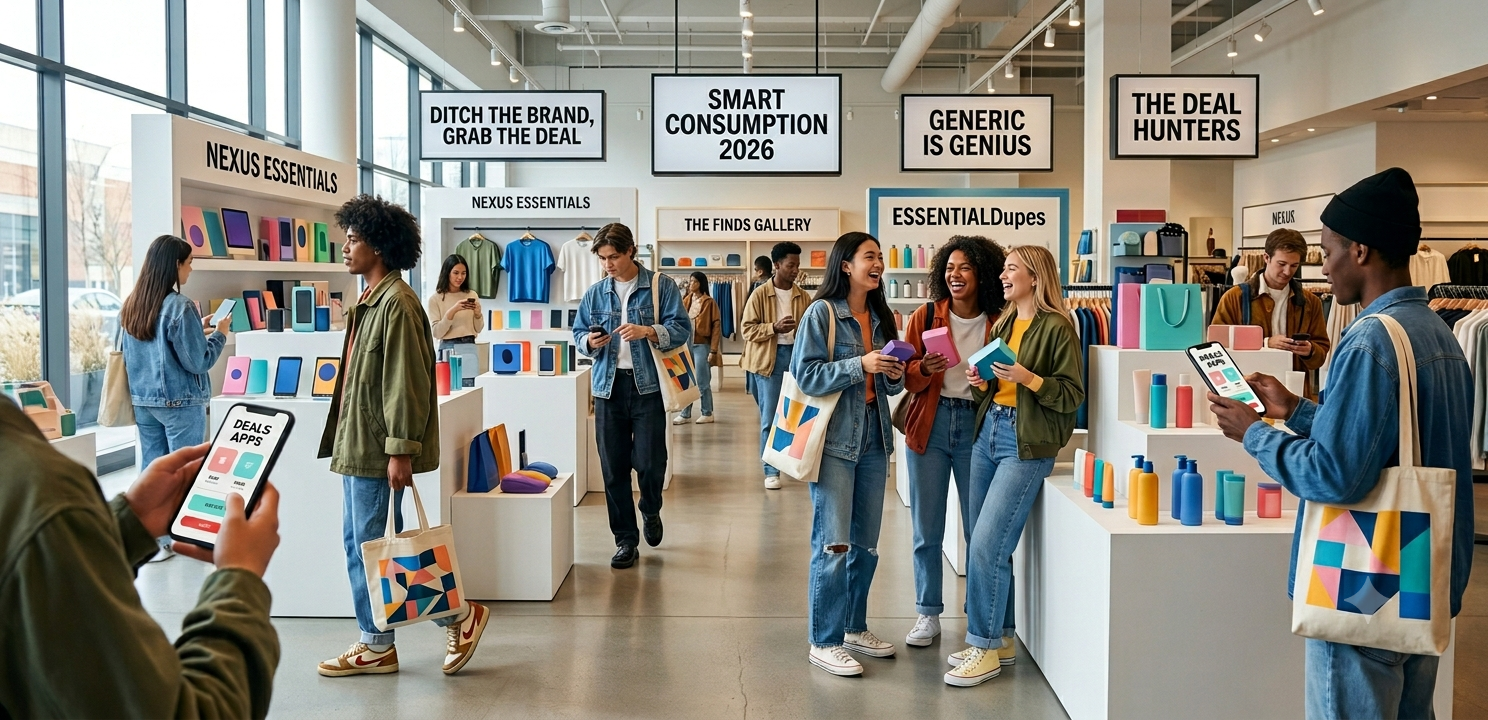
How Gen Z & Millennials Are Ditching Brands for Better Deals in 2026
The US retail landscape is experiencing a tectonic shift. For decades, legacy brands commanded fierce loyalty, relying on their name to justify premium prices. But in 2026, the younger generations—Gen Z and Millennials—are rewriting the rules.
Legacy brand status is no longer the primary motivator. Driven by economic pragmatism, digital savvy, and a redefinition of luxury, these influential demographics are actively ditching the brand name in favor of the better deal. They aren’t just looking for “cheap”; they are executing a strategic, intentional approach to modern consumption that prioritizes utility, value, and smart acquisition over status symbols.
If you are a US retailer or a budget-conscious consumer, understanding this shift is crucial. This is your master guide to how and why Gen Z and Millennials are transforming into the ultimate deal hunters.
The Death of Blind Brand Loyalty: Redefining Value
In 2026, younger US consumers do not define value by the logo on a product. Their trust metrics have shifted.
1. Authenticity Over Heritage
Generations raised in the age of social media see through traditional corporate messaging. They do not value a brand simply because it has been around for 100 years. Instead, they trust peer reviews, user-generated content (UGC), and authentic endorsements from creators who have actually used the product. A 5-star review from an everyday user on a generic alternative is worth more than a celebrity-endorsed billboard for a major brand.
2. Extreme Price Transparency
Economic volatility has made price a non-negotiable metric. Armed with real-time price comparison tools and integrated browser extensions, these consumers possess extreme price transparency. They can instantly see if a legacy brand is inflating its price relative to a nearly identical, generic competitor (a practice often termed “greedflation” in modern discourse).
3. Utility and Performance as the New Status
The new status symbol is not owning the most expensive item; it is acquiring the smartest one. Getting a functional, aesthetically pleasing generic product that performs 95% as well as the branded counterpart at 60% of the cost is seen as a sign of financial intelligence and resourcefulness.
How Gen Z & Millennials Execute the Deal: Strategic Tactics
This shift is powered by sophisticated, proactive deal-hunting strategies.
1. Mastering Automated Coupon Stacking
Younger US shoppers do not wait for a physical circular in the mail. They leverage sophisticated automation. Their standard practice involves stacking verified, real-time digital promo codes found on aggregation platforms with automated cashback rewards earned through browser extensions and financial apps.
2. Leveraging the “Dupe” Economy
The viral success of “dupe” culture (finding affordable alternatives to high-end products) has exploded. TikTok and Instagram are filled with creators dissecting everything from viral fashion to luxury cosmetics, identifying high-quality, generic substitutes available on budget platforms. This has normalized, and even celebrated, the purchase of non-branded essentials.
3. Utilizing Price Drop Alerts and AI Assistants
They are proactive. Rather than checking a site daily, they set up automated price drop alerts on specific items and categories. In 2026, many use integrated AI shopping assistants that constantly scan for the best live prices, active coupon combinations, and the best time to buy across the entire US web.
4. Early Enrollment in Retailer Rewards
Millennials and Gen Z are quick to enroll in free retailer rewards programs solely for the immediate benefit—which usually includes an instant 10-20% off welcome code and free shipping, effectively bypassing standard retail margins from their very first interaction.
Key Categories Where Brands Are Losing the War
The retreat from legacy brands is most pronounced in essential and high-frequency categories:
- Groceries and Home Essentials: Retailer private label brands (e.g., Target’s ‘Up&Up’ or Kroger’s ‘Simple Truth’) are seeing record US sales. Consumers realize the ingredients and performance are often identical to national brands but significantly cheaper.
- Basic Apparel and Wardrobe Staples: For everyday items like t-shirts, hoodies, activewear, and simple footwear, consumers are turning away from premium logos toward reliable, generic basics, saving brand-spending only for highly specialized, durable gear.
- Cosmetics and Personal Care: The beauty industry has been revolutionized by viral generic brands (popularized on social media) that offer high-performance formulations (e.g., serums, moisturizers, SPF) at a fraction of department-store prices.
- Tech Accessories and Smart Devices: Instead of purchasing all accessories (chargers, cases, headphones) from the primary tech manufacturer, younger consumers are flocking to verified third-party generic alternatives, utilizing community reviews to confirm quality.
Final Thoughts: Mastering Smart Consumption in 2026
The shift among Gen Z and Millennials away from legacy brands toward better deals is not a temporary trend; it is a permanent re-education of the US consumer. They define luxury as the intelligence to maximize their lifestyle through smart acquisition. Retailers that rely on brand heritage must justify their premium with tangible performance, sustainability, or unique innovation.
For consumers, the rule is clear: The logo is optional, but the value is mandatory.
Don’t pay full price for brand identity! Before your next US online haul, visit our homepage to find the newest, verified digital coupons and exclusive deal alerts that help you acquire the smart finds you deserve!